

Market Analysis
The Great Design Squeeze: Where UX/UI Jobs Actually Exist in 2026
February 11, 2026
If you are a designer, the job market feels broken. That is because quantitatively, it is. The ratio of Design roles to Engineering roles has collapsed to a historic low.
The "Golden Age of UX"—when every startup needed a dedicated researcher, a UI specialist, and a UX strategist—is over. In 2026, the market has pivoted to Engineering Dominance.
We analyzed over 50,000 active tech listings across the United States. The results confirm the squeeze: Design roles now make up only 2.3% of the total tech labor market.
The Brutal Math: 1 Designer for Every 12 Engineers
For every single open role for a Product Designer, UX Researcher, or UI Specialist, there are roughly 12.2 open roles for Software Engineers.
Tech Role Distribution (Feb 2026)
- Software Engineering28.0%
- Product Management2.5%
- Design (UX/UI/Product)2.3%
This explains the flood of applicants for every design listing. The supply of talented bootcamp graduates and laid-off seniors far outstrips the microscopic demand.
Where Are The "Missing" Jobs?
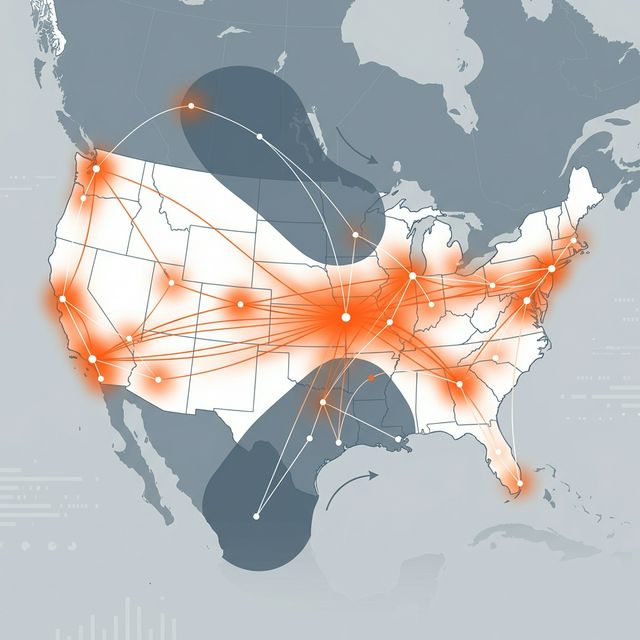
They haven't disappeared; they have consolidated. The days of distributed design teams in every Tier 2 city are fading. Design is re-centralizing into three specific hubs.
1. San Francisco: The "Founding Designer" Hub
In the Bay Area, design roles still exist, but they have morphed. The demand is not for "junior UX researchers." It is for "Founding Designers."
Strategies in SF are clear: Hire one senior generalist who can do research, Figma prototyping, and ideally valid HTML/CSS. The pay is high ($180k+), but the bar is "Staff Level" or nothing.
2. New York City: The Agency & Fintech Holdout
NYC remains the strongest market for pure UI and visual design, driven by two forces:
- Fintech: Complex trading platforms and consumer banking apps still require heavy UX investment.
- Agencies: While tech companies cut in-house design, they are outsourcing brand work to NYC agencies.
3. Remote: The "Unicorn" Requirement
Remote design roles are the most competitive of all. To survive here, you strictly need to be a "Product Designer" who leans technical.
The emerging requirement: If you can't push a PR to fix a CSS bug or update a React component library, you are at a rigorous disadvantage against the candidate who can. The wall between Design and Frontend Engineering is dissolving.
The Verdict for 2026
The "bootcamp dream" of learning Figma for 3 months and landing a six-figure remote job is statistically dead.
To win in 2026, you cannot just be a "user advocate." You must be a builder. The designers getting hired today are the ones who can bridge the gap—who understand the design system not just as a Figma library, but as a codebase.
Adapt your skills, or face the squeeze.
Are you a "Top 1%" Designer?
The market is tough, but great roles still exist for the right match. Score your resume to see if you beat the "Seniority Wall."
Get Your Free Resume Score